
Issue13-Newsletter
Tech, Innovation and Research
“We never know the worth of water till the well is dry.”
– Thomas Fuller, Historian
Welcome to the thirteenth issue of Digital Sustainability Alliance Weekly Newsletter, where we explore the crossroads of technology and sustainability. From groundbreaking news to eco-friendly products, we’re here to keep you informed and inspired.
Let’s charge forward, sustainably!
Recent Developments :
Mammoth Carbon Capture: World’s Largest Air Pollution Vacuum Launches in Iceland
Scientists unveil the Mammoth carbon capture plant using innovative direct air capture methods to remove thousands of tons of carbon dioxide from the atmosphere.
A revolutionary carbon removal plant named “Mammoth” began operations in Iceland in May 2024, marking a significant milestone in the fight against climate change. The facility, developed by Swiss company Climeworks, represents the world’s largest direct air capture (DAC) technology designed to extract planet-heating pollution from the atmosphere.Located in Hellisheidi, Iceland, the Mammoth carbon capture plant is designed with an ambitious nameplate capacity to remove up to 36,000 tons of carbon dioxide annually. This impressive facility represents a ten-fold increase from its predecessor, Orca, and marks a critical step in Climeworks’ strategic roadmap to address global carbon emissions. The plant’s development showcases remarkable engineering efficiency. Breaking ground in June 2022, Climeworks completed 90% of the plant’s infrastructure in just 18 months. The company’s modular technology design allows for flexible construction and scalability, enabling rapid deployment of carbon capture technologies. The plant utilizes a sophisticated modular design featuring 72 potential “collector containers” that capture carbon directly from the air. Multiple containers are currently operational, and plans are to expand in the coming months. These advanced machines use specialized chemical processes to strip carbon dioxide from the atmosphere with unprecedented efficiency. The Mammoth carbon capture facility is powered entirely by Iceland’s clean geothermal energy and represents a cutting-edge approach to addressing global climate challenges. Through a partnership with Icelandic company Carbfix, the captured carbon will be transported underground and transformed into stone, permanently sequestering the harmful greenhouse gas.
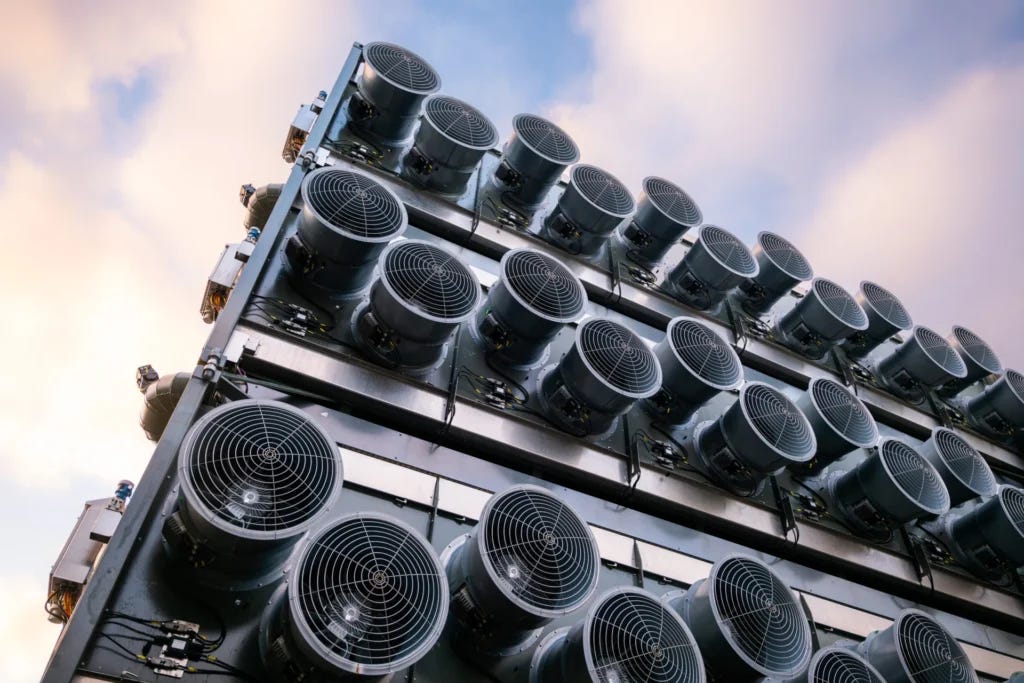
The global scientific community has long sought effective solutions to mitigate climate change. The Mammoth carbon capture plant’s technology is a promising breakthrough, offering a proactive approach to reducing atmospheric carbon dioxide. Unlike traditional methods focusing solely on emissions reduction, this technology actively removes carbon from the air. Economic and environmental experts continue to debate the long-term viability of direct air capture technologies. While promising, these solutions require significant investment and technological innovation. Climeworks addresses these challenges through a strategic approach that combines cutting-edge research with practical implementation. The technological complexity of the mammoth carbon capture plant is genuinely remarkable. Advanced chemical engineering enables the precise extraction of carbon dioxide molecules from the atmosphere. Specialized filters and intricate chemical reactions work in concert to separate carbon from other atmospheric gases, demonstrating human ingenuity in environmental problem-solving. Climeworks’ ambitious scaling strategy involves a carefully planned progression of carbon removal capabilities. The company aims to incrementally increase its capacity from thousands to tens of thousands of tons per year, with a visionary goal of reaching megaton capacity by 2030 and gigaton capacity by 2050.
Climeworks co-founder Christoph Gebald emphasizes the importance of real-world technology deployment. “Based on the most successful scale-up curves, reaching gigaton by 2050 means delivering at megaton scale by 2030. Nobody ever built what we are building in DAC, and we are both humble and realistic that the most certain way to be successful is to run the technology in the real world as fast as possible and relentlessly deploy it.” The carbon removal market presents both challenges and opportunities. Current removal costs hover around $1,000 per ton, which remains prohibitively expensive for large-scale implementation. However, Climeworks has developed a clear roadmap to reduce costs to $300-$350 by 2030 and potentially $100 by 2050, making the technology increasingly viable.
Transparency and verification remain crucial aspects of Climeworks’ approach. The company plans to third-party verify and certify the carbon removal performed at Mammoth, addressing potential skepticism and ensuring the credibility of their carbon capture efforts. This commitment to accountability sets a new standard in climate solution technologies.
Environmental researchers continue to assess the broader impact of the technologies used at the mammoth carbon capture plant. While global carbon removal capacity remains minimal—approximately 0.01 million metric tons annually—each innovative project brings humanity closer to meeting the 70 million tons needed by 2030 to meet international climate goals.
The launch of the Mammoth plant symbolizes more than technological achievement. It represents human resilience, creativity, and commitment to addressing our time’s most significant environmental challenge. By pushing the boundaries of scientific innovation, Climeworks demonstrates the potential for human ingenuity to create meaningful ecological solutions.
As global temperatures continue to rise and environmental challenges intensify, the mammoth carbon capture plant technologies present a promising solution. They provide tangible evidence that technological innovation can be crucial in protecting our planet’s delicate ecological balance, offering a hopeful path toward a more sustainable future.
Neil Pein, BNP Paribas Leasing Solutions: How Product-as-a-Service is reshaping IT sustainability

Neil Pein, CEO of BNP Paribas Leasing Solutions, believes Product-as-a-Service (PaaS) can offer a long-term solution to e-waste, affordability and global shortages – bringing in a new era of circular IT strategies.
“Second-hand marketplaces are booming, with cost and sustainability-conscious consumers flocking to websites and apps for electronics, clothes, homeware, and beauty products,” he says.
Vinted, traditionally known for second-hand fashion, has recently launched its first dedicated electronics category, attracting customers with pre-loved smartphones, wearable tech, and audio devices.
“This shift extends beyond consumers – businesses, too, are rethinking how they manage, procure and use technology, particularly as part of a wider push towards reducing e-waste and promoting circular economy practices,” Pein explains.
“The IT industry has long been a champion for ‘as-a-service’ models, particularly for areas like cloud computing, software, and infrastructure. But now this model is also emerging as an efficient and sustainable alternative to the traditional ownership model. It’s grounded in an understanding of product lifecycles, offering assets to clients through usage or performance-based contracts instead of outright ownership – aligning IT procurement with sustainability goals, while improving cost efficiency.”
(E-)waste not, want not
E-waste is one of the biggest causes of environmental harm. A record 62 million tonnes of e-waste was produced in 2022 – up 82% from 2010. By 2030, this is projected to rise to 82 million tonnes. Many of these discarded electronic goods end up in landfill, leaking hazardous materials which seep into soil, air, and water, causing serious environmental damages and health risks.
A wave of sustainability regulations sweeping across Europe means that more and more businesses are turning to PaaS models to stay both compliant and competitive. Many IT businesses have begun setting ambitious targets to incorporate recycled components into new products and reduce their carbon footprints. Apple has tapped into the ‘recycle, reuse, replace’ attitude, pledging to include 100% recycled cobalt in its batteries by 2025.
Pein says: “To achieve these targets and cut down e-waste, firms must consider how they can set up closed loop systems that allow customers to return used devices and recycle their components.
“This requires a shift from outright ownership to an IT procurement model where IT devices are acquired on a contract basis. Here, devices are procured, used, and then recovered for refurbishment and reuse – rather than going straight to landfill after their first lifecycle. Device refurbishment is an integral part of the service, ensuring businesses have a plan to measurably reduce emissions and waste that is built into their IT strategy.”
The hidden costs of new technology production
Pein feels that the environmental costs of manufacturing new technology can often be overlooked – with its true impact slipping through the gaps somewhat unnoticed. For instance, data centres and electronic production are hugely resource-intensive, consuming vast swathes of energy and water. Annually, a 1-megawatt data centre can use the equivalent of the daily water consumption of around 300,000 people for cooling. Semiconductor manufacturing also has a huge water footprint, with the average chip manufacturing facility consuming 10 million gallons of ultrapure water every day.
“PaaS presents a more long-term solution to these challenges given it supports product lifecycle extension and enhanced device utilisation,” says Pein.
“Part of this includes designing new technology with its end-of-life in mind from the get-go – such as using modular components that allow for easier disassembly, repair, and recycling. This allows them to offer more affordable options to customers, while minimising environmental impact.”
For the cost-conscious buyers
Pein counties: “Embracing circular economy practices in the IT sector also makes financial sense. In Europe, the demand for refurbished smartphones is growing, expected to reach more than 431 million units by 2027 – as consumers seek modern technology more cheaply and sustainability. In the business world, PaaS models allow businesses to tailor their IT procurement strategies to match the needs of their workforce, without incurring high upfront costs. Value-add services, such as maintenance and support, help reduce overall IT expenditure while mitigating compliance, security, and sustainability risks.”
Alongside being costly and environmentally intensive, Pein notes that manufacturing new products is also becoming much more complex for businesses as they grapple with complex supply chains and access to raw materials.
He explains: “The global semiconductor chip shortage, kicked off in 2020 by the COVID-19 pandemic, caused knock-on supply issues which continued for more than three years. This brought the need for alternative sourcing strategies under the spotlight, particularly where resources are finite and susceptible to disruption. PaaS models offer a viable solution to ensure that the lights can stay on, while reducing the dependence on volatile supply chains.
“Striving for sustainability and cost efficiency has pushed PaaS models in IT to the forefront. As well as circular end-of-life handling for unwanted devices, PaaS solutions also offer more efficient in-life handling, like proactive maintenance services, to extend product longevity and reduce unnecessary waste. Embedding circularity into IT procurement strategies can play an important role in helping businesses to cut their environmental impact – enabling them to not just stay on the right side of compliance, but drive a more sustainable future.”
Pein was appointed CEO at BNP Paribas Leasing Solutions in March 2024. Previously, he was of head of payments for BNP Paribas since 2021 where he played a pivotal role in the business’s transformation. He began his career in financial markets with Goldman Sachs and joined BNP Paribas in 2007 as an equity derivatives trader before transitioning to the Group’s Financial Management department from 2013 to 2016. During this period, he focused on acquisitions, divestments, and capital optimisation initiatives.
In 2016, he was appointed sales director at BNP Paribas Leasing Solutions for technology equipment leasing in France. He rejoined the group in 2018 and was instrumental in the creation of Axepta BNP Paribas which provides international payment solutions for retailers. He also spearheaded the development of ‘New Digital Business’, a unit that unites payment-related Fintechs within the Group, including Nickel, Floa, and Lyf.
EU sustainability rules overhaul: Brussels delivers €6.3 billion in administrative relief

The European Commission’s new omnibus package slashes reporting requirements for thousands of companies while preserving green objectives, aiming to boost competitiveness by cutting red tape across key sustainability frameworks. EU sustainability rules are undergoing a dramatic overhaul. The European Commission has delivered on its promise to cut red tape, announcing a comprehensive simplification package expected to save businesses €6.3 billion annually in administrative costs. The proposals, released on February 26, 2025, aim to boost competitiveness while maintaining the bloc’s commitment to climate goals. The package represents the Commission’s first significant step in its ambitious simplification agenda, targeting a reduction of at least 25% in administrative burdens across the board and at least 35% for SMEs by the end of its mandate.
The measures cover several key areas of environmental regulation, including sustainability reporting, due diligence requirements, the EU Taxonomy, and the carbon border adjustment mechanism (CBAM). “Simplification promised, simplification delivered!” declared Commission President Ursula von der Leyen.
“We are presenting our first proposal for far-reaching simplification. EU companies will benefit from streamlined rules on sustainable finance reporting, sustainability due diligence and taxonomy. This will make life easier for our businesses while ensuring we stay firmly on course toward our decarbonisation goals.”
Significant changes to EU sustainability reporting rules
One of the most significant changes affects the Corporate Sustainability Reporting Directive (CSRD). The Commission proposes removing approximately 80% of companies from its scope, focusing obligations only on the most prominent firms with more than 1,000 employees or turnover above €50 million – those most likely to have substantial environmental impacts. For companies that remain in scope, the proposals include a two-year postponement (until 2028) of reporting requirements for those currently required to report as of 2026 or 2027. The package also reduces EU Taxonomy reporting obligations by roughly 70% and limits mandatory reporting to only the largest companies.
Commissioner Maria Luís Albuquerque emphasised that the simplification maintains environmental ambitions: “We are defining a path towards more growth-friendly, more usable and proportionate EU sustainable finance rules. It’s about striking the right balance between reducing excessive administrative burden and focusing on our longer-term goals.”
Streamlined due diligence and supply chain monitoring
The overhaul also simplifies sustainability due diligence requirements under the Corporate Sustainability Due Diligence Directive (CSDDD). Companies will now generally focus systematic due diligence only on direct business partners, and assessments will be reduced from annual to every five years, with ad hoc assessments where necessary. The proposal removes EU civil liability conditions while preserving victims’ compensation rights under Member States’ civil liability regimes. Application of requirements for the most prominent companies will be postponed by one year (to July 2028).
Commissioner Michael McGrath said the changes strike a balance: “We are simplifying compliance for large companies while upholding the core objective to prevent companies from indirectly contributing to exploitative business practices harming human rights, the climate, or the environment through their value chains.”
CBAM simplification for small importers
The most dramatic simplification comes from the Carbon Border Adjustment Mechanism (CBAM). The Commission is introducing a cumulative annual threshold of 50 tonnes per importer, exempting approximately 182,000 importers (90% of the total) – primarily SMEs – from CBAM obligations while covering over 99% of emissions in scope. “This is expected to bring about €1.12 billion in savings while still covering over 99% emissions in scope,” noted Commissioner Valdis Dombrovskis. The new threshold will also save public authorities in the Member States approximately €87.5 million through reduced processing.
Investment capacity boost
Beyond regulatory simplification, the package optimises several investment programs, including InvestEU, EFSI, and legacy financial instruments. These changes are expected to mobilise around €50 billion in additional public and private investments and generate €350 million in cost savings through simplified administrative requirements.
Business reaction and next steps
The proposals have generally been met with relief from the business community, which had long complained about overlapping requirements and implementation costs. Environmental groups, however, have expressed concerns about the potential weakening of standards.
The legislative proposals will now be sent to the European Parliament and Council for consideration. In a sign of urgency, the Commission has called for the fast-track adoption of certain measures, particularly those postponing CSRD disclosure requirements and CSDDD transposition deadlines.
Commissioner Stéphane Séjourné, Executive Vice President for Prosperity and Industrial Strategy, said: “We can show that Europe is not only an incredible market to invest, produce, sell and consume but also a simple market. This proposal delivers real simplifications – less administrative burden, easier access to funding, and clearer, more predictable rules. We keep our objectives but change the way to achieve them better.”
The Commission has indicated that additional simplification packages targeting small mid-caps, farmers, and digital reporting are in development, demonstrating its commitment to comprehensive regulatory reform while maintaining Europe’s green transition goals.
Thanks for reading Digital Sustainability Alliance by Birchlogic.! Subscribe for free to receive new posts and support my work.
Weekly Release :
In today’s world, sustainability isn’t just a buzzword—it’s an essential strategy for businesses striving to reduce their environmental footprint while optimizing performance. As technology continues to evolve, the IT industry has a crucial role to play in driving sustainability. From energy-efficient data centers to green software development, adopting sustainable IT practices is no longer optional; it's a responsibility.
One of the most effective ways organizations can manage their environmental impact is through adherence to well-established frameworks and standards. These frameworks provide clear guidance on reducing energy consumption, minimizing waste, and enhancing the sustainability of technology infrastructures. In this article, we'll explore the most prominent sustainability frameworks and standards in the IT space and how they can be leveraged to create a greener future.
Navigating Sustainable IT: Key Frameworks and Standards to Drive Environmental Impact

In today’s world, sustainability isn’t just a buzzword—it’s an essential strategy for businesses striving to reduce their environmental footprint while optimizing performance. As technology continues to evolve, the IT industry has a crucial role to play in driving sustainability. From energy-efficient data centers to green software development, adopting…
Quick Byte before you go
One ton of 100 percent recycled paper saves the equivalent of 4,100 kWh of energy, 7,000 gallons of water, 60 pounds of air emissions and three cubic yards of landfill space.